oh no, i don’t condone abusive relationships! i just write, reblog, and create art, fanfic, meta, gifsets, and other content that portrays an abusive relationship as sexy, attractive, ideal, and the only true choice for each character. most of the time i put them in happy aus or situations despite claiming that i only ship them because of the angst! that’s not condoning abuse, you silly antis!
this is giving me angry abuse apologist anons in my inbox please keep reblogging this i live on their tears
I am honestly fascinated to know what OP thinks of Brian Fuller’s Hannibal, both as a series and as a source of fanworks, given that its status as an adaptation arguably makes it a species of fanfic in its own right, too. Or Game of Thrones, for that matter.
I’m just… really, really flummoxed by the idea that creating something which features abusive/badwrong relationships is generally understood to be Drama provided it’s in some sense original, but if the same thing happens in fandom, then we somehow lose all ability to distinguish between depiction and endorsement.
This is just me spitballing, but I wonder if it has something to do with the fact that it’s frowned on in fandom – and with reason! – to offer criticism or critical analysis of individual fanworks, especially fics, so that a certain percentage of those thwarted critical impulses get redirected into generalised and vehement moral condemnation of specific ships and tropes.
Like: when it comes to books, comics, TV shows, games and films, the established culture of critical reception means that we’re usually able to criticise a specific narrative without being told that the very act of doing so is Mean And Unacceptable – and again, I completely get why fanfic has the conventions it does around unsolicited crit or analysis. But when it comes to analysing a given original work, regardless of the invariable disagreements about taste and whathaveyou, there’s a general critical ability to distinguish between such options as:
the author is deliberately and skilfully exploring darker themes in a way which I, personally, find fascinating
the author is deliberately and skilfully exploring darker themes which I personally, cannot enjoy
the author has attempted to explore darker themes but has, in my opinion, failed in a way that undermines their intentions
the author has, in my opinion, used darker themes without considering their implications within the wider narrative
the author has, in my opinion, used darker themes without considering their implications to particular readers
my knowledge of the author leads me, personally, to suspect that their uncritical use of darker themes is the result of, and therefore a testament to, their actual worldview
the author has stated clearly that their worldview informs the treatment of darker themes in their work, such that their depiction is, by their own admission, an endorsement of particular themes, though not necessarily specific acts contained in the work
All of which are really crucial distinctions to make, and just the tip of the iceberg when it comes to analysing a work which might delight and infuriate by turns. Which isn’t to say that there’s ever a fannish failure to apply these distinctions to original works, too: manifestly, once a particular work is branded Bad, then anyone who dares create fanworks of it is tarred with the same Bad brush. But when they are applied, which is most of the time, these are all distinctions predicated on the ability to distinguish and discuss an individual work in a critical or negative fashion – and in fandom, where works are produced predominantly for free, often by new or developing writers, often as a catharsis for personal trauma, often for an incredibly niche audience, and, crucially, very often in contexts where sexual fantasies, dark or otherwise, form the basis of what are otherwise in-depth narratives, this sort of specific criticism is not only difficult to make, but subculturally taboo.
So instead, people get worked up in general about individual ships or squicks or tropes that they dislike, especially when they appear in confluence – and again, I understand why! Because a fanwork, unlike an original story, is based on an existing narrative, which makes the creative distortion visible to readers. If someone takes what is canonically a happy, PG narrative and writes a dark, sadistic fic about the characters, it’s easy to feel that something innocent is being defiled; while on the other hand, if someone takes what is canonically a warped, abusive dynamic and reworks it as something light and fluffy, it’s similarly easy to feel as though they’re trying to exonerate or elide the original darkness, because why else would they bother?
In both cases, that angry, reactive feeling is easily intensified in a context where, once particular ships or fannish character interpretations become dominant in the minds of multiple fans, such that the thing being exalted is fundamentally separate to the source material – or, as just as often happens, is fundamentally separate to the preferred interpretation of the reactive person – then it’s easy to look at any and every reference to it, however brief, as lots of people saying, in shorthand, “I love and approve this awful, abusive concept because I think abuse is okay.”
But here’s the thing: people come to fanfic for all sorts of reasons, and they don’t owe you, personally, an explanation for their choices – because unlike, say, Guillermo del Toro, they are not public figures with a certain inherent degree of responsibility or accessibility to their readership. Among my friends who write fanfic, I know people who’ve written their own sexual assaults or rapes into fics as a way to help them process those experiences, or who write darkfic as a safe outlet for sexual fantasies they’d never want to actually try in real life (or who did try them, and had them go wrong, or who want to create a reality where all the bad things they’ve experienced are, in this fictional medium, wholly under their control, and not the control of the person/s who hurt them.) There are people who face their fears by putting them in fanfic. And on, and on, and on.
Are there also genuinely abusive people whose work reflects what they believe is okay IRL? Yes, there are; but that’s also true of people who create original works, not just fanfics (see: Woody Allen), and while we absolutely condemn those individuals when the truth comes out, we don’t respond by issuing a moratorium on any future stories containing elements favoured by the abuser, because regardless of the purity of your intentions, it’s pretty much impossible to say Thou Shalt Not Create This Particular Thing without simultaneously banning a lot of stuff that, actually, it would’ve been good to keep, because stories – and people, and stories about people – are just that complex.
Anyway. This kind of got away from me a bit, and like I said, this is just me theorising, but the more I think about it, the more I feel as if there really is a correlative relationship between fandom’s regular forays into total moral puritanism and its inability to offer criticism except at a general level.
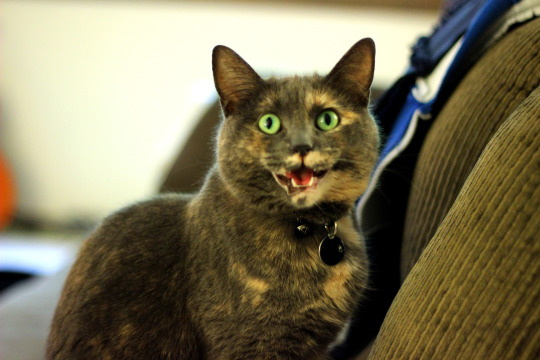
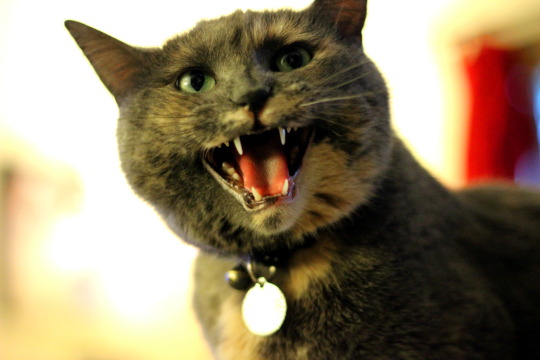
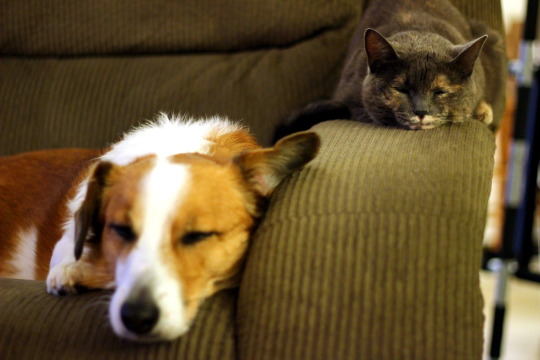
You enter a brightly light, nondescript room. In the center of the room is a cat. The cat is screaming about something.
>_
>PET
You cannot reach the cat.
The cat’s screaming continues.
>_
>SCREAM IN COMPLIANCE.
The cat may want to converse with you. You scream at the cat unintelligibly, as loudly as possible.
The cat seems unperturbed, and responds to your scream by screaming more loudly.
>_
>THROW MOUSE TOY AT CAT
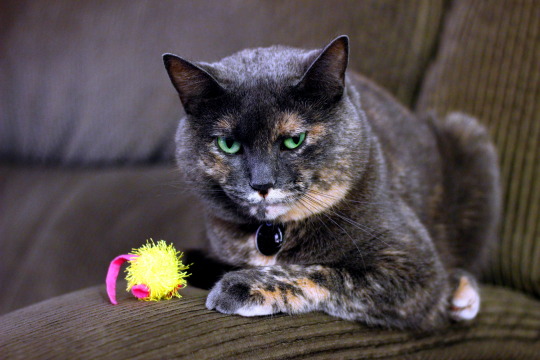
You notice a cat toy on the floor nearby. Hastily, you pick the toy up and toss it to the cat. Unfortunately, you aim poorly in your haste and strike the cat in the face with the toy.
The cat stops screaming. She is not pleased.
>_
>SUMMON DOG
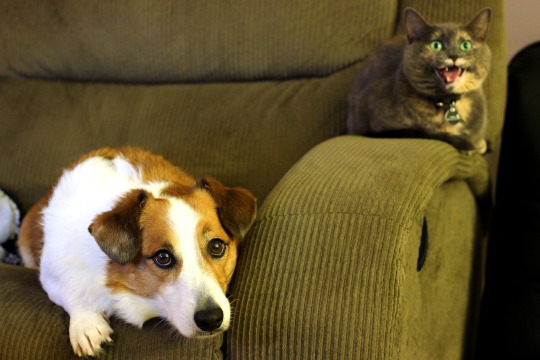
Though you have no magical powers that you are aware of, you approach the cat and attempt to cast a spell of Summon Dog. Surprisingly, a small dog appears near the cat.
The cat, perhaps surprised by the dog’s sudden appearance, begins screaming again.
>_
>OFFER FOOD
Nearby is a small container of cat food. You present it to the cat, who immediately consumes the entirety of the container and promptly falls asleep.
You have reached the end of the Cat Ownership Simulator. Thank you for playing. For a more realistic experience, we recommend playing the Cat Ownership Simulator every day for the next 15 to 20 years.
Just had a little look into it now and holy shit that an amazing idea. Talk about two birds one stone.
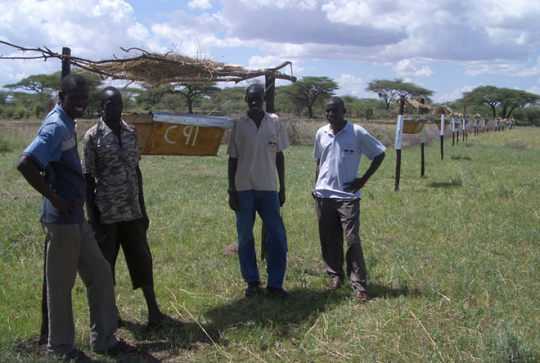
Now they use African honey bees, which are way more aggressive then the European honey bee. So the elephants have a pretty good reason for being afraid of them.
Now if you’ve ever been around / in countries with elephants you’ll know, that they are pretty damn destructive. They’ll destroy whole structures, and you’re pretty powerless to stop them. So the use of these bee hive fences is ingenious, and something I’m going to have to read a lot more on.
These are what they look like btw:
This is cool as shit and i love how they’re standing fearless next to African killer bee hives
GOD DAMN THATS COOL
‘killer bees’ are only aggressive if you threaten their nest – which elephants do by accident, since they are stompy guys who knock shit over all the time. i’m so glad people are finding a solution that doesn’t involve violence. elephants don’t want to ruin your things, they’re just enormous and easily spooked.
No harm to any religion. It’s just a lamp ads by an Australian company. However, it’s funny!
I’m going to cry 😂😂
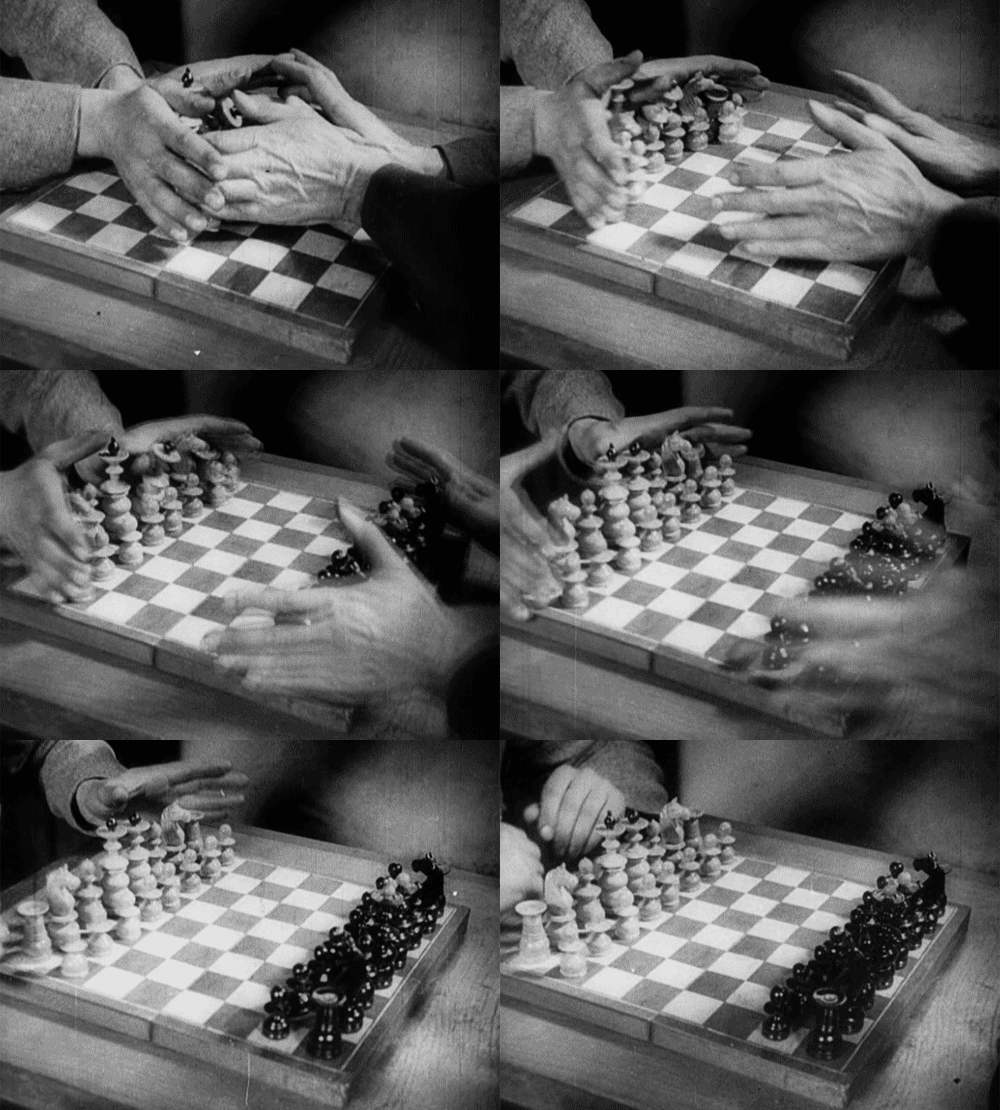
Ahaha, the reason why Mohammad is specifically mentioned as not being able to be there is because in Islam, portrayals and portraits of Mohammad are forbidden. But they didn’t want to be seen as either hand waving him as at the table but not shown or as explicitly omitted.
BIG, HUGE thanks to @rollychan for crunching the numbers and making the charts. This data is based on 4,639 respondents to the kudos poll.
What do kudos mean?
Respondents were able to select all meanings that apply to them.
According to people who self-identify as readers:
1872 mean “This fic was awesome! I loved it!”
966 mean “I recommend this story!”
1494 mean “Thank you so much for sharing your story!”
1238 mean “Good job”
103 mean “It was okay, but not good enough for me to comment”
571 mean “I finished the entire story”
According to people who self-identify as writers:
12 mean “This fic was awesome! I loved it!”
8 mean “I recommend this story!”
13 mean “Thank you so much for sharing your story!”
17 mean “Good job”
11 mean “It was okay, but not good enough for me to comment”
10 mean “I finished the entire story”
According to people who self-identify as both readers and writers:
922 mean “This fic was awesome! I loved it!”
496 mean “I recommend this story!”
790 mean “Thank you so much for sharing your story!”
724 mean “Good job”
155 mean “It was okay, but not good enough for me to comment”
324 mean “I finished the entire story”
The poll currently has 10,160 respondents. I am going to stop accepting responses at this point and link these results. I hope you find this as interesting as I do! I learned a thing!
These results are very interesting, and so I decided to run a couple of tests to determine whether these differences are statistically significant – that is, what is the probability that these numbers look like they’re indicating differences between readers and authors, but it’s actually due to random chance?
To do this, I used the socsstatistics’Chi Square calculator to perform a test for independence. Because there were so few people who identified themselves as only writers, I only looked at the “Readers” and the “Reader-Writers” numbers.
For each option (this fic is awesome, good job, I finished the story, etc), I reformatted the answers into yes/no questions using the total number for each category, provided by @rollychan.
As an example: These figures include a total of 4,369 respondents, and 2,073 people identified themselves as only readers. Out of these, 1,872 people selected “This fic was awesome, I loved it!” as an answer, and 201 did not. Thus, we have 1,872 “yes” responses and 201 “no” responses to the question “Do you use the kudos option to mean ‘this fic was awesome, I loved it’?”
Because we have a large sample size, I’m setting the alpha threshold at p < 0.05. That is, there has to be less than a 5% probability that these results happened due to chance, and a 95% probability that these results mean there is an actual difference between the answer from Readers (2073 total) and Reader-Writers (2514 total).
Results
“This fic is awesome, I loved it!” – there is a difference (p < 0.01)
“I recommend this story” – there is a difference (p < 0.01)
“Thank you for sharing your story” – there is a difference (p < 0.01)
“Good job” – there is a difference (p < 0.01)
“It was okay, but not good enough for me to comment” – these data do not show a significant difference (p = 0.08)
“I finished this story” – there is a difference (p < 0.01)
So, interesting! There has been some discussion as to whether authors attribute less positive meanings to kudos than people who are only readers, and the answer to that appears to be a firm yes.
However, a lot of focus has been put on the “it was okay, but not good enough for me to comment” meaning on kudos (which, I would like to point out that only around 5% of Readers and 6% of Reader-Writers selected “yes” as a response). Is there a significant difference in the responses of these two sets of kudos-givers? With these data, we find that the answer is no. The p value is quite close to the threshold, but nowhere near the results for the other questions. So, while it may be indicating a trend, it would be interesting to see if repeating this test with the full set of 10k+ answers would give us something different!
– Rose
I love me some stats. And I love even more people who do the stats work for me 🙂 This is FANTASTIC. Thank you so much!
Throughout her translation of the “Odyssey,” Wilson has made small but, it turns out, radical changes to the way many key scenes of the epic are presented — “radical” in that, in 400 years of versions of the poem, no translator has made the kinds of alterations Wilson has, changes that go to truing a text that, as she says, has through translation accumulated distortions that affect the way even scholars who read Greek discuss the original. These changes seem, at each turn, to ask us to appreciate the gravity of the events that are unfolding, the human cost of differences of mind.
The first of these changes is in the very first line. You might be inclined to suppose that, over the course of nearly half a millennium, we must have reached a consensus on the English equivalent for an old Greek word, polytropos. But to consult Wilson’s 60 some predecessors, living and dead, is to find that consensus has been hard to come by…
Of the 60 or so answers to the polytropos question to date, the 36 given above [which I cut because there were a lot] couldn’t be less uniform (the two dozen I omit repeat, with minor variations, earlier solutions); what unites them is that their translators largely ignore the ambiguity built into the word they’re translating. Most opt for straightforward assertions of Odysseus’s nature, descriptions running from the positive (crafty, sagacious, versatile) to the negative (shifty, restless, cunning). Only Norgate (“of many a turn”) and Cook (“of many turns”) preserve the Greek roots as Wilson describes them — poly(“many”), tropos (“turn”) — answers that, if you produced them as a student of classics, much of whose education is spent translating Greek and Latin and being marked correct or incorrect based on your knowledge of the dictionary definitions, would earn you an A. But to the modern English reader who does not know Greek, does “a man of many turns” suggest the doubleness of the original word — a man who is either supremely in control of his life or who has lost control of it? Of the existing translations, it seems to me that none get across to a reader without Greek the open question that, in fact, is the opening question of the “Odyssey,” one embedded in the fifth word in its first line: What sort of man is Odysseus?
“I wanted there to be a sense,” Wilson told me, that “maybe there is something wrong with this guy. You want to have a sense of anxiety about this character, and that there are going to be layers we see unfolded. We don’t quite know what the layers are yet. So I wanted the reader to be told: be on the lookout for a text that’s not going to be interpretively straightforward.”
Here is how Wilson’s “Odyssey” begins. Her fifth word is also her solution to the Greek poem’s fifth word — to polytropos:
Tell me about a complicated man. Muse, tell me how he wandered and was lost when he had wrecked the holy town of Troy, and where he went, and who he met, the pain he suffered in the storms at sea, and how he worked to save his life and bring his men back home. He failed to keep them safe; poor fools, they ate the Sun God’s cattle, and the god kept them from home. Now goddess, child of Zeus, tell the old story for our modern times. Find the beginning.
When I first read these lines early this summer in The Paris Review, which published an excerpt, I was floored. I’d never read an “Odyssey” that sounded like this. It had such directness, the lines feeling not as if they were being fed into iambic pentameter because of some strategic decision but because the meter was a natural mode for its speaker. The subtle sewing through of the fittingly wavelike W-words in the first half (“wandered … wrecked … where … worked”) and the stormy S-words that knit together the second half, marrying the waves to the storm in which this man will suffer, made the terse injunctions to the muse that frame this prologue to the poem (“Tell me about …” and “Find the beginning”) seem as if they might actually answer the puzzle posed by Homer’s polytropos and Odysseus’s complicated nature.
Complicated: the brilliance of Wilson’s choice is, in part, its seeming straightforwardness. But no less than that of polytropos, the etymology of “complicated” is revealing. From the Latin verb complicare, it means “to fold together.” No, we don’t think of that root when we call someone complicated, but it’s what we mean: that they’re compound, several things folded into one, difficult to unravel, pull apart, understand.
“It feels,” I told Wilson, “with your choice of ‘complicated,’ that you planted a flag.”
If I had to identify who the big “robot” author was before Asimov, it would be Jack Williamson in the 1920s and 1930s. He specialized in robot stories featuring horrible tyrants that destroy mankind, and his robot stories nearly all have downer endings. Jack Williamson is one of the more crucial people in the development of science fiction. He was the first to use terms that have entered into the English language like “blaster,” “genetic engineering,” and “terraforming.”
The first of Jack Williamson’s robot stories is the Humanoids, a story about superintelligent and frighteningly relentless robots that utterly and completely micromanage the human race by eliminating anything dangerous and removing us from toil, which basically means they’ve eliminated the entire point of the human race and keep us from doing anything fun, letting us sit around “with folded hands.” It was an eerie story about a Borg-like and very alien machine intelligence that simply didn’t understand that everything that gives our lives meaning, drink and junk food and even driving our own cars, has an element of risk, and that our imperfect lives are defined by choice. It does not have a happy ending; the robots win in that one.
Another of Jack Williamson’s “evil robot tyrant” stories is “The Iron God” from 1941, about a machine of colossal intellect that menaces the human race. It’s maybe the first “giant robot” story in the form we’d recognize. Like the Humanoids, it also has a downer ending.
In addition, there was also Eando Binder’s Adam Link stories. “Eando Binder” was a pen name for two brothers, Earl and Otto Binder. The first Adam Link story starts as first-person, with a realization over time that the narrator is a robot. It was also genre self-aware, the main character even reads Frankenstein.
The follow up story is “The Trial of Adam Link,” which is one where Adam is accused of murder. The trial isn’t just about Adam’s innocence, however…it becomes about proving whether he truly is a thinking sentient being responsible for his actions, whether he should be treated as property or a person. It was great stuff, and clearly the inspiration for maybe the best Star Trek episode of all time (”Measure of a Man”).
As the Amazing Stories pulp mag started to become schlockier and more sensational, though, the Adam Link character was brought back over and over and became less of a hounded outsider in introverted stories, and more of a superhero, in tales like “Adam Link Goes to War.” He gets a robot dog, a robot wife (named – and prepare to be blindsided here – Eve), and he became a detective and champion athlete. Adam Link was easily the most popular science fiction character of the 1940s except for maybe the Lensmen.
Isaac Asimov once said that the robot was mainly used as a “wisecracking sidekick.” Except for Grag and Otho, Captain Future’s two allies, I can’t think of a single pre-1960 “straight example” of this.
The single most direct inspiration for Asimov’s robot stories, according to Asimov himself, were not true robots at all, but living alien creatures in immortal cyborg bodies known as the Zoromes. They were found in stories called “The Jameson Sattelite,” a very popular series of science fiction stories told in the early 1930s.
Basically, a man who is dying of an incurable disease, Jameson, has himself frozen and placed in a satellite orbiting the earth, where he is discovered a billion years later when the earth is dead by a race of bizarre alien explorers, the Zoromes, who place Jameson in an immortal robot body the way he does, and take him with them when they explore the universe. The Zoromes are interesting because their analytical brains mean they approach issues differently from the human means of thinking. Asimov said that the Zoromes were not malevolent, but they were different, which is what got him thinking.
Thus far, I’ve mentioned stories about robot tyrants full of dread and unhappy endings, stories where robots engage in soul searching philosophy about sentience, and a bizarre, melancholic series set a billion years in the future. I have absolutely no idea where people get the idea that old school pulp scifi was all optimistic futures and rocket utopias.
O’Brien & Bashir are Dead: Fan Fiction – Call out for any lovely beta readers out there!
I’m looking for beta readers for a work in progress please. The story is a gif-set idea that got massively out of hand… and now I’m currently three acts through a five act script.
I would really appreciate any DS9 betas out there who’d be willing to take a look and sense check what I have so far? It’s a pretty meta plot:
Basically Rosencrantz and Guildenstern in space. As Sisko monologues his way through the actually important main plot of ‘In the Pale Moonlight’, Bashir and O’Brien are stuck in the bar killing time and flipping coins that will only ever come down tails…
What do you do when people are numb to the incredible. And nothing ever seems to change?
So my roommate (girl) bought this vodka?? and me (guy) and my other roommate (guy) poured a glass and have just been staring at it for a good 10 minutes idk what is this glitter fuckery I don’t wanna drink it
I (guy) am curious why your genders are relevant
only girls (girl) can buy glitter vodka
thats a big glass of vodka
it’s like a Moscato so u can drink it straight it’s vodka mixed w juice and wine n shit
I (icon) need some
This (drink) is very good (delicious)
we (friends) drink this (glitter vodka wine) during D&D (role playing game) when one of us (characters) has to take a healing potion (fictional elixir)
With this post I listed 10 outline techniques to help writes move their story from a basic idea to a complete set of arcs, plots, sequences and/or scenes. Or to simply expand whatever you have in hands right now.
If you have a vague story idea or a detailed one, this post is for you to both discover and organize. A few technique will work perfectly. A few won’t. Your mission is to find the one that works best for you. That said, I advice you to try out as many techniques as possible.
So, are you ready? Open your notebook, or your digital document, and let’s start.
1. Snowflake method: Start with a one-sentence description of the novel. Then, develop this simple phrase into a paragraph. Your next step is to write a one-page summary based on the paragraph, you can write about characters, motivations, goals, plots, options, whatever you feel like. From this point on, you can either start your book or expand the one-page summary into four pages. And, at last, four pages into a brief description of known sequences of scenes. Your goal is to make the story more and more complex as you add information, much like a forming snowflake.
2. Chapter by chapter: List ten to twenty chapters, give each chapter a tittle and a brief description of what should happen. Then, break each chapter into three to five basic sequences of scenes. Give each sequence a title, a brief description and a short list of possibilities (possibilities of dialogues, scenarios, outcomes, moods, feelings… just play around with possibilities). From this point on, you can either create the scenes of sequences with a one-sentence description for each or jump straight to writing. Your goal is to shift from the big picture to a detail-oriented point of view.
3. Script: This might sound crazy, but, with this technique, you will write the screenplay of your story as if it’s a movie. No strings attached to creative writing, just plain actions and dialogues with basic information. Writing a script will take time, maybe months, but it will also enlighten your project like no other technique. Your goal is to create a cinematic view of your story. How to write a script here.
4. Free writing: No rules, no format, no step, just grab a pen or prepare your fingers to write down whatever idea that comes up. Think of possibilities, characters, places, quests, journeys, evolutions, symbolisms, fears, good moments, bad moments, clothing, appearances. Complete five to ten pages. Or even more. The more you write, the more you will unravel. You can even doodle, or paste images. Your mission is to explore freely.
5. Tag: This technique is ideal if you have just a vague idea of the story. Start by listing ten to fifteen tags related to the story. Under each tag, create possible plots. And, under each plot, create possible scenes. Grab a red felt pen and circle plots and scenes that sparkle your interest.
6. Eight-point arc: With this technique you will divide your story into eight stages. They are Stasis, Trigger, Quest, Surprise, Critical Choice, Climax, Reversal and Resolution. The Stasis is the every-day-life of your main character. Trigger is an event that will change the every-day-life of your character (for better or for worse). Quest is a period of your main characters trying to find a new balance, a new every-day-life (because we all love a good routine). Surprise will take your character away from their new found every-day-life. Critical Choice is a point of no return, a dilemma, your character will have to make the hardest decision out of two outcomes, both equally important. Climax is the critical choice put to practice. Reversal is the consequence of the climax, or how the characters evolved. Resolution is the return to a new (or old) every-day-life, a (maybe everlasting) balance.
7. Reverse: Write down a description of how your story ends, what happens to your characters and to those around them. Make it as detailed as possible. Then, move up to the climax, write a short scenario for the highest point of your story. From there, build all the way back to the beginning.
8. Zigzag: Draw a zigzag with as many up and downs as you want. Every up represents your main character moving closer to their goal. Every down represents your main character moving further from their goal. Fill in your zigzag with sequences that will take your character closer and farther from the goal.
9. Listing: The focus of this technique is exploring new ideas when your story feels empty, short or stagnated. You’ll, basically make lists. Make a long list of plot ideas. Make another list of places and settings. Make a list of elements. And a list of possible characters. Maybe a list of book titles. Or a list of interesting scenes. A list of bad things that could happen inside this universe. A list of good things. A list of symbolism. A list of visual inspiration. A list of absurd ideas you’ll probably never use. Then, gather all this material and circle the good items. Try to organize them into a timeline.
10. Character-driven: Create a character. Don’t worry about anything else. Just think of a character, their appearance and style. Give them a name. Give them a basic personality. Give them a backstory. Develop their personality based on the backstory. Now, give this character a story that mirrors their backstory (maybe a way to overcome the past, or to grow, or to revenge, or to restore). Based on your character’s personality, come up with a few scenes to drive their story from beginning to end. Now, do the same thing for the antagonist and secondary characters.
So, when is it time to stop outlining and start writing?
This is your call. Some writers need as many details as they can get, some need just an basic plot to use as a North. Just remember, an outline is not a strict format, you can and you will improvise along the way. The most important is being comfortable with your story, exploring new ideas, expanding old concepts and, maybe, changing your mind many times. There’s no right or wrong, just follow your intuition.






 blackash26